
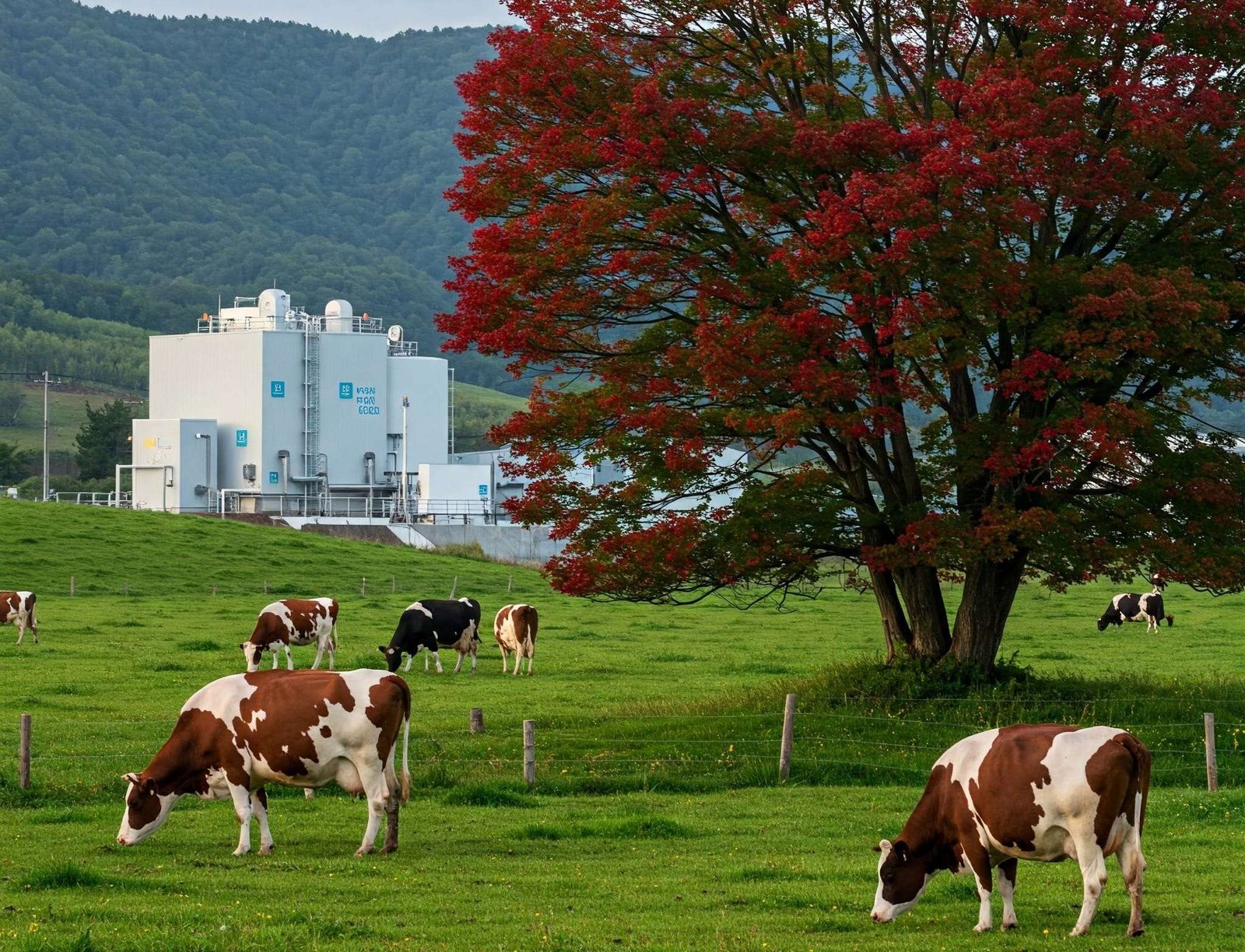
On the northernmost island of Hokkaido, Japan, a pioneering project is transforming a seemingly mundane agricultural byproduct into a clean energy source. Dairy farms, renowned for their milk production, are now also contributing to a sustainable future by converting cow manure into hydrogen fuel. This innovative approach not only addresses environmental concerns associated with livestock waste but also provides a localized and renewable energy solution for the region.
Harnessing the Power of Manure:
At the heart of this initiative lies the ingenious process of extracting methane from cow manure. Through anaerobic digestion, microorganisms break down the organic matter in the absence of oxygen, releasing methane gas as a byproduct. This methane, a potent greenhouse gas, is typically released into the atmosphere, contributing to climate change. However, in Hokkaido, this potent waste product is captured and transformed into a valuable energy resource.
The Transformation to Hydrogen:
The extracted methane undergoes a series of processes to be converted into hydrogen. This involves a process known as steam methane reforming, where methane reacts with steam at high temperatures to produce hydrogen and carbon dioxide. While carbon dioxide is generated in this step, efforts are underway to capture and utilize it for other purposes, further minimizing the environmental impact.
Fueling a Sustainable Future:
The resulting hydrogen fuel has diverse applications within the local community. It powers the very farms that produce it, powering machinery and reducing reliance on fossil fuels for agricultural operations. Furthermore, the hydrogen is utilized to fuel industrial vehicles and even contributes to the energy needs of a local zoo, showcasing the versatility of this innovative energy source.
A Circular Economy in Action:
This project exemplifies a circular economy approach, where waste products are transformed into valuable resources. By effectively utilizing a byproduct of agricultural activities, Hokkaido demonstrates a commitment to sustainability and resource efficiency. This innovative model not only reduces environmental impact but also creates new economic opportunities within the region.
The Potential for Widespread Adoption:
The success of this project in Hokkaido has the potential to inspire similar initiatives worldwide. As the global demand for clean energy solutions continues to grow, this innovative approach to waste management offers a promising pathway towards a more sustainable future. By harnessing the power of organic waste, we can not only mitigate the environmental impact of agriculture but also create a decentralized and renewable energy supply chain.
Challenges and Future Directions:
While this project represents a significant step forward, challenges remain. The cost-effectiveness of hydrogen production from manure needs to be further optimized to make it more widely accessible. Additionally, research and development efforts are crucial to improve the efficiency of the conversion process and minimize any potential environmental impacts.
Despite these challenges, the project in Hokkaido serves as a beacon of hope, demonstrating the potential for innovative solutions to address pressing environmental concerns. By embracing sustainable practices and harnessing the power of renewable energy sources, we can create a more resilient and environmentally responsible future for generations to come.
FAQs
Q: What is the project in Hokkaido about?
A: The project converts cow manure into hydrogen fuel, providing a clean and renewable energy source for local farms, industrial vehicles, and a zoo.
Q: How is hydrogen produced from cow manure?
A: The process involves:
- Anaerobic Digestion: Cow manure is broken down by microorganisms in the absence of oxygen, producing methane gas.
- Methane Conversion: The extracted methane is then converted into hydrogen through a process like steam methane reforming.
Q: What are the benefits of this project?
A: The benefits include:
- Providing a clean, zero-carbon emission fuel source.
- Reducing greenhouse gas emissions by capturing methane.
- Creating a sustainable and localized energy solution.
- Transforming agricultural waste into a valuable resource.
- Promoting a circular economy.
Q: Where is the hydrogen fuel used?
A: The hydrogen fuel is used to power:
- Local dairy farms’ machinery.
- Industrial vehicles.
- A local zoo.
Q: Why is cow manure used for this project?
A: Cow manure is a readily available agricultural byproduct that can be effectively converted into methane and then hydrogen. This project addresses the environmental concern of methane release from livestock waste.
Q: Is this project environmentally friendly?
A: Yes, it significantly reduces greenhouse gas emissions and provides a clean energy source. While the steam methane reforming process creates CO2, efforts are being made to capture and utilize it.
Q: Can this technology be used in other places?
A: Yes, the technology has the potential to be replicated in other regions with significant livestock farming. However, factors like the availability of manure and infrastructure need to be considered.
Q: What are the challenges of this project?
A: Challenges include:
- Optimizing the cost-effectiveness of hydrogen production.
- Improving the efficiency of the conversion process.
- Capturing and utilizing the CO2 that is produced during the methane reforming process.
Q: What is the significance of this project?
A: The project demonstrates a sustainable and innovative approach to waste management and renewable energy production, showcasing the potential for agricultural byproducts to contribute to a cleaner future.
Q: What is anaerobic digestion?
A: Anaerobic digestion is a process where microorganisms break down organic materials, like cow manure, in the absence of oxygen, producing biogas, which is primarily methane.