

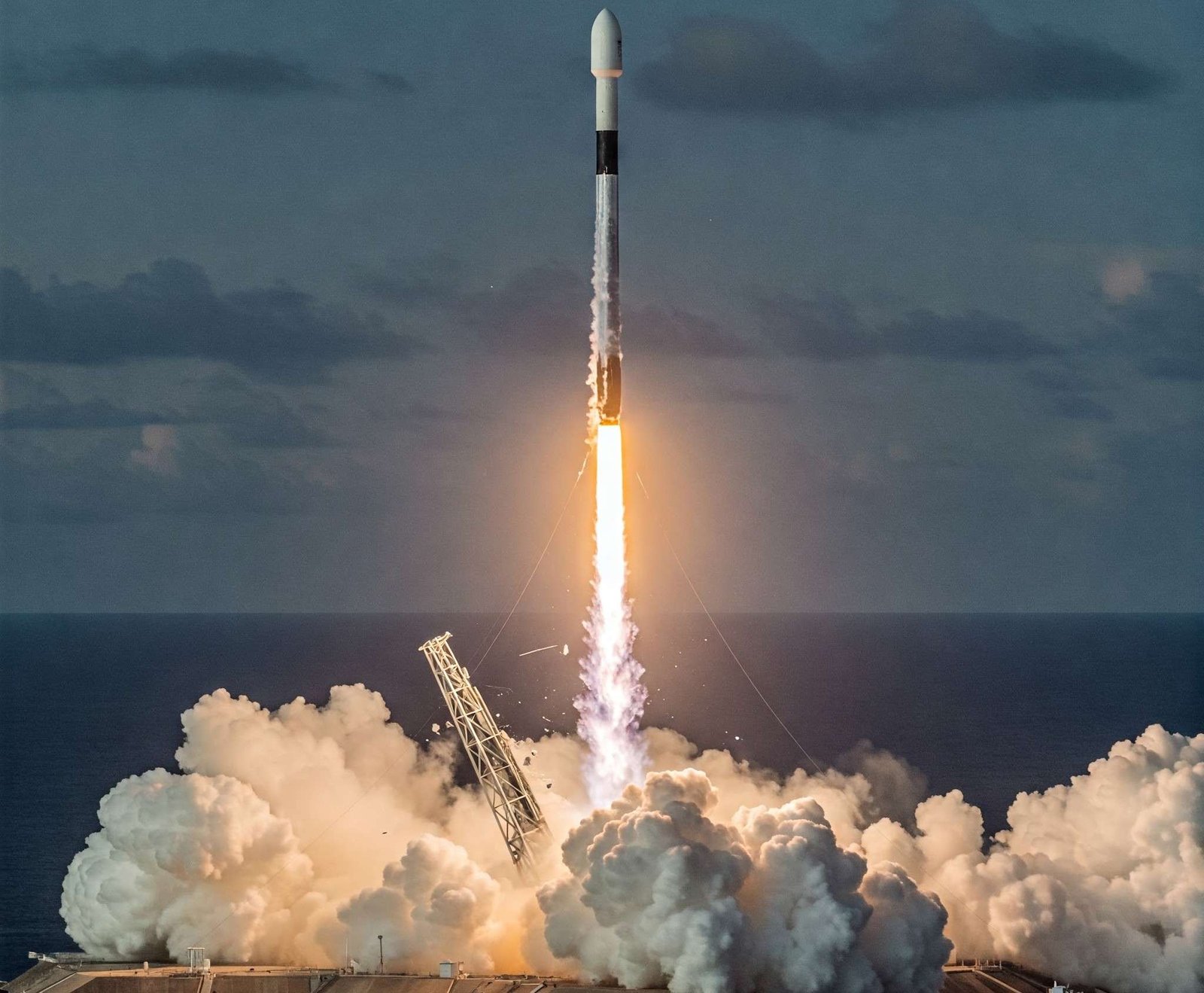
SpaceX, under the leadership of Elon Musk, continues to push the boundaries of space exploration and commercial spaceflight. With a relentless drive for innovation and a focus on making humanity a multiplanetary species, the company is actively pursuing several groundbreaking initiatives. From the development of the colossal Starship to the expansion of the Starlink satellite constellation, SpaceX is reshaping the landscape of space technology.
Starship: A Giant Leap Towards Interplanetary Travel
At the heart of SpaceX’s ambitious vision lies the Starship, a fully reusable super-heavy-lift launch vehicle designed to transport humans and cargo to the Moon, Mars, and beyond. This revolutionary spacecraft represents a significant departure from traditional rocket designs, boasting a stainless-steel construction and a modular design capable of carrying a massive payload. Recent developments have focused on testing and refining the Starship’s various components, including the powerful Raptor engines and the heat shield system. While early test flights have encountered challenges, they have provided invaluable data for the engineering teams, bringing SpaceX closer to achieving its goal of routine and affordable interplanetary travel.
Starlink: Connecting the World Through Satellite Internet
Beyond interplanetary ambitions, SpaceX is actively deploying the Starlink satellite constellation, a network of thousands of low Earth orbit (LEO) satellites designed to provide high-speed, low-latency internet access to underserved and remote areas across the globe. The Starlink project has seen rapid expansion in recent years, with frequent launches adding to the growing constellation. This initiative has the potential to bridge the digital divide, connecting communities that have historically lacked reliable internet access. Moreover, Starlink has proven to be a vital communication tool in times of crisis, providing connectivity in disaster-stricken regions where traditional infrastructure has been compromised. SpaceX continues to enhance the Starlink network, improving its performance and expanding its coverage.
Human Spaceflight: Expanding Access to Orbit
SpaceX has solidified its position as a key player in human spaceflight, providing launch services for both government and commercial missions. The company’s Crew Dragon spacecraft has successfully transported astronauts to the International Space Station (ISS) under NASA’s Commercial Crew Program, restoring America’s capability to launch humans into orbit from U.S. soil. In addition to government missions, SpaceX is also facilitating commercial spaceflights, enabling private citizens to experience the wonder of space travel. These initiatives are democratizing access to space, paving the way for a future where space tourism and private space exploration become more commonplace.
Developing Lunar and Martian Infrastructure
SpaceX’s long-term vision extends beyond simply reaching the Moon and Mars. The company is actively developing the infrastructure necessary to establish a sustainable human presence on these celestial bodies. This includes designing habitats, developing resource extraction techniques, and creating transportation systems for interplanetary travel. SpaceX is working closely with NASA on the Artemis program, aiming to land humans on the Moon by the mid-2020s. These collaborative efforts are crucial for establishing a stepping stone for future Martian missions.
Innovation in Rocket Technology: Reusability and Beyond
SpaceX’s relentless pursuit of innovation has led to significant advancements in rocket technology, particularly in the area of reusability. The company’s Falcon 9 and Falcon Heavy rockets have demonstrated the feasibility of recovering and reusing rocket stages, dramatically reducing the cost of launch services. SpaceX continues to refine its reusability technology, aiming to make spaceflight even more affordable and accessible. The development of the fully reusable Starship represents the next major leap in this area, promising to revolutionize space transportation.
The Economic Impact and Future Outlook
SpaceX’s initiatives are not only transforming the space industry but also having a significant economic impact. The company’s activities are creating jobs, stimulating innovation, and driving investment in related sectors. As SpaceX continues to expand its operations and pursue its ambitious goals, it is poised to play a leading role in shaping the future of space exploration and commercial spaceflight. The company’s relentless drive for innovation, coupled with its focus on making space accessible to all, positions it as a key player in the unfolding space age.
FAQs
Q: What is Starship?
A: Starship is SpaceX’s fully reusable super-heavy-lift launch vehicle designed for transporting humans and cargo to the Moon, Mars, and beyond. It represents a significant advancement in reusable rocket technology.
Q: What is Starlink?
A: Starlink is a satellite internet constellation developed by SpaceX. It consists of thousands of low Earth orbit (LEO) satellites providing high-speed, low-latency internet access globally, especially to underserved areas.
Q: What is SpaceX’s role in human spaceflight?
A: SpaceX provides launch services for both government and commercial human spaceflight missions. Its Crew Dragon spacecraft transports astronauts to the International Space Station (ISS) and facilitates commercial spaceflights for private citizens.
Q: What are SpaceX’s goals for lunar and Martian exploration?
A: SpaceX aims to establish a sustainable human presence on the Moon and Mars. This includes developing infrastructure like habitats, resource extraction techniques, and transportation systems. They are also partnering with NASA on the Artemis program.
Q: How is SpaceX making spaceflight more affordable?
A: SpaceX focuses on developing reusable rocket technology, such as the Falcon 9 and Falcon Heavy, and the fully reusable Starship. This dramatically reduces the cost of launch services.
Q: What are the challenges SpaceX faces with Starship development?
A: Challenges include testing and refining the Raptor engines, perfecting the heat shield system, and ensuring successful landing and reuse of the spacecraft.
Q: How does Starlink benefit remote areas?
A: Starlink provides high-speed internet access to areas that lack traditional internet infrastructure, bridging the digital divide and enabling access to education, healthcare, and economic opportunities.
Q: What is SpaceX’s involvement in the Artemis program?
A: SpaceX is working with NASA on the Artemis program, providing the Starship Human Landing System to transport astronauts from lunar orbit to the Moon’s surface and back.
Q: What is the economic impact of SpaceX’s initiatives?
A: SpaceX’s activities create jobs, stimulate innovation, and drive investment in related sectors, contributing to economic growth.
Q: How is SpaceX addressing space debris concerns with Starlink?
A: SpaceX designs Starlink satellites with deorbit capabilities and collaborates with space agencies to track and mitigate potential collisions. They also work to minimize the impact of their satellites on astronomical observations.